What You'll Find in This Post
Quick Machu Picchu Train Facts
- Main Operators: Inca Rail and PeruRail
- Main Stations: Wanchaq, San Pedro (Cusco) & Ollantaytambo (Sacred Valley)
- Bimodal: A Bus + Train combo (Commonly used from Cusco)
- Avg. Cost: $110 - $250 USD round trip (Economy classes)
- Luggage: Limited to 8kg (17lbs) carry-on per person
- Altitudes: Cusco (3,400m), Ollantaytambo (2,790m), Aguas Calientes (2,040m)
- Phone Data: Maya Mobile eSIM - always reliable during my travels!
Pro Tip: If you are worried about altitude sickness, stay 1+ nights in Cusco, Ollantaytambo or Aguas Calientes before visiting Machu Picchu.
Disclaimer: This post contains affiliate links. If you book or buy through these links, I may earn a small commission at no extra cost to you. Thank you for supporting my blog!
Intro: Getting from Cusco to Aguas Calientes
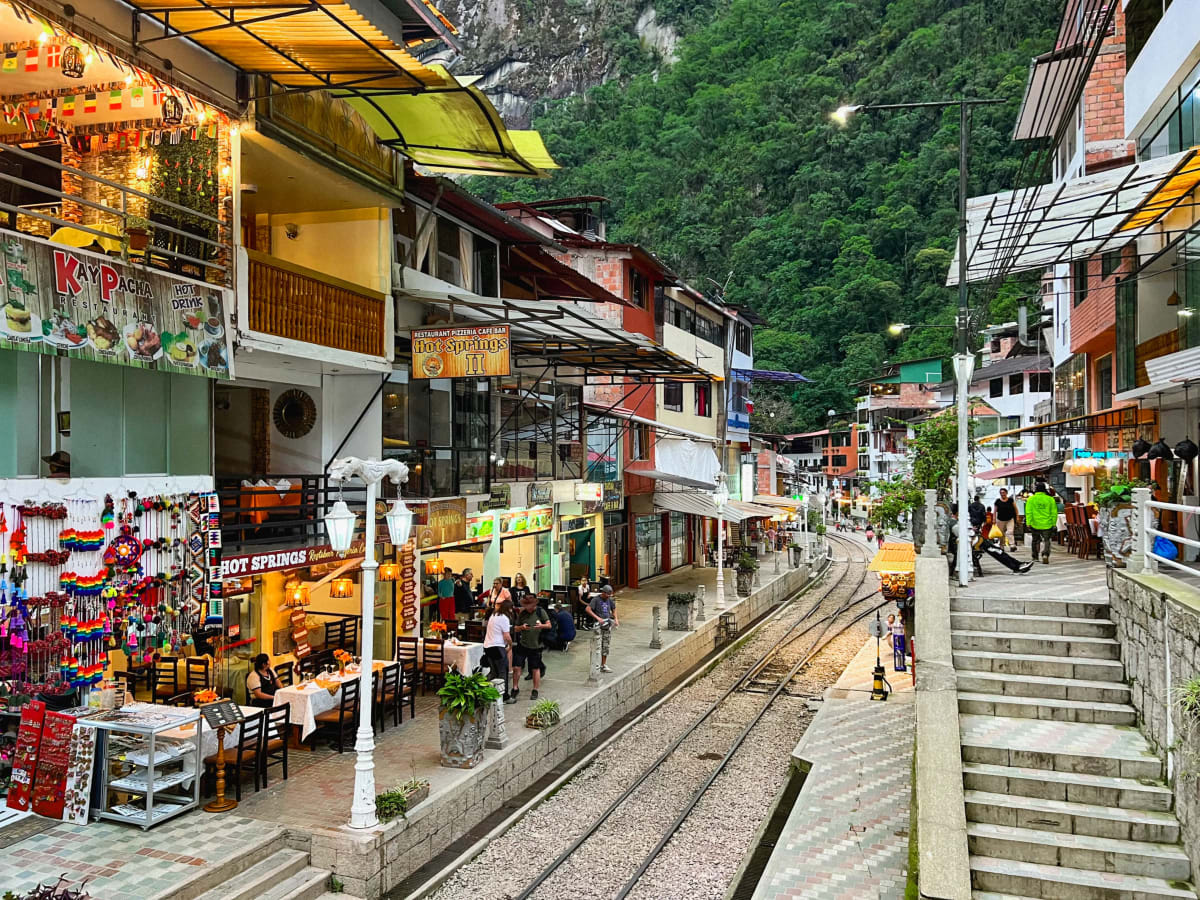
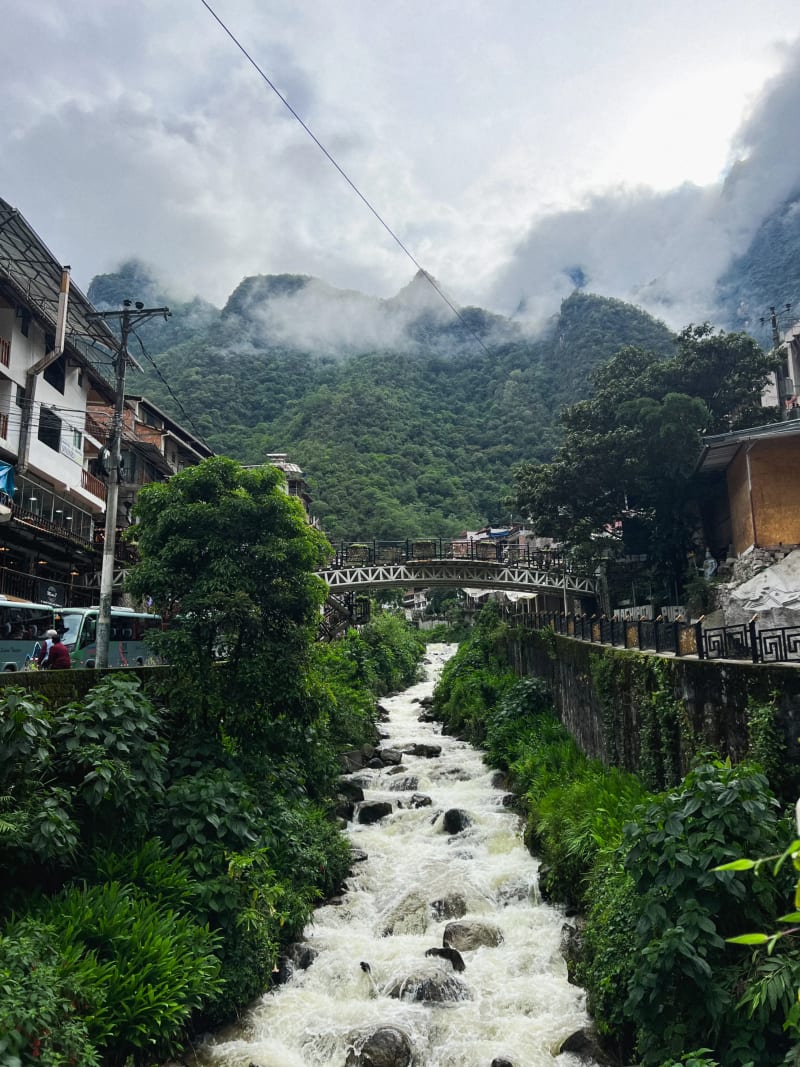
After getting to Cusco, the next step in your journey to Machu Picchu is reaching Aguas Calientes, also known as Machu Picchu Pueblo or Machu Picchu Town. The town sits in the valley directly below the Machu Picchu citadel; since there are no roads leading there, you have to arrive by railway. There are two main operators: IncaRail and PeruRail.
What Are "Bimodal" Train Tickets?
When booking, you'll likely see the term "bimodal". Simply put, this is a bus + train combo. While train tracks do run through Cusco (starting at the San Pedro station), direct rail service[1] is only available during the dry season and can take a bit longer. The most popular way to reach Machu Picchu—and the only one available year-round—is to shortcut the mountains by taking a bus from the city to a station in the Sacred Valley (typically Ollantaytambo, Urubamba, or Pachar). From there, you'll hop on the train for the final scenic stretch to Aguas Calientes. If you buy a bimodal ticket, the bus ride to the valley station is already included in the price.
[1] Direct trains from San Pedro and Poroy typically only run during the dry season (May–December). During the rainy season (Jan-April), all Cusco departures revert to bimodal for safety. Your ticket will clearly state your meeting point and transport type, but understanding these "moving parts" will help you plan your trip perfectly. If you choose the direct train to avoid a bus, just be prepared for the switchbacks. To get out of the Cusco valley, the train has to pull forward and then reverse multiple times to climb the mountain.
Inca Rail: Their Cusco services are almost exclusively bimodal[2]. You’ll meet at their office on Avenida El Sol (near the Plaza de Armas), take their bus to Ollantaytambo, and then switch to the train. It’s a very seamless and easy process. This is what we did!
PeruRail: Since they own the tracks that run through the city, they have more station options. They use three main stations in or near Cusco for starting points to Aguas Calientes:
- Wanchaq: Located at the end of Av. El Sol (a few blocks from the IncaRail office), this is their main bimodal station. You’ll take a bus to either Ollantaytambo, Urubamba, or other stations like Pachar to catch your train.
- San Pedro & Poroy: These stations are primarily used for direct trains. San Pedro is right in the city center (near the market), while Poroy is about a 20-minute drive away.
[2] Exceptions for IncaRail: (1) Some ultra-luxury services (like "The Private") can sometimes be arranged as a direct departure from Poroy. (2) During the peak dry season, they occasionally trial direct departures from San Pedro to compete with PeruRail, but these are rare and often more expensive.
Getting to the Stations Yourself (Ollantaytambo, Urubamba, & More)
Another great option is to arrange your own transport to a station in the Sacred Valley and board the train there. These tickets, offered through IncaRail and PeruRail, are slightly cheaper since you aren't paying for the company's bus transfer, and the stations are closer to Aguas Calientes than Cusco is.
Why would you want to choose this? First, many travelers prefer to spend a few nights in either Cusco or the Sacred Valley to acclimatize to the altitude because they're so high above sea level—Cusco is 3,400m and Ollantaytambo is 2,790m. Being at that altitude can make people sick, so adjusting a few days before your Machu Picchu experience can really help. For more info on what this feels like, remedies, and how to acclimate, visit my full Cusco Travel Guide!
⛰️ Visit my Perú Viator shop to book the best tours & activities in Lima, Cusco & Machu Picchu! ⛰️
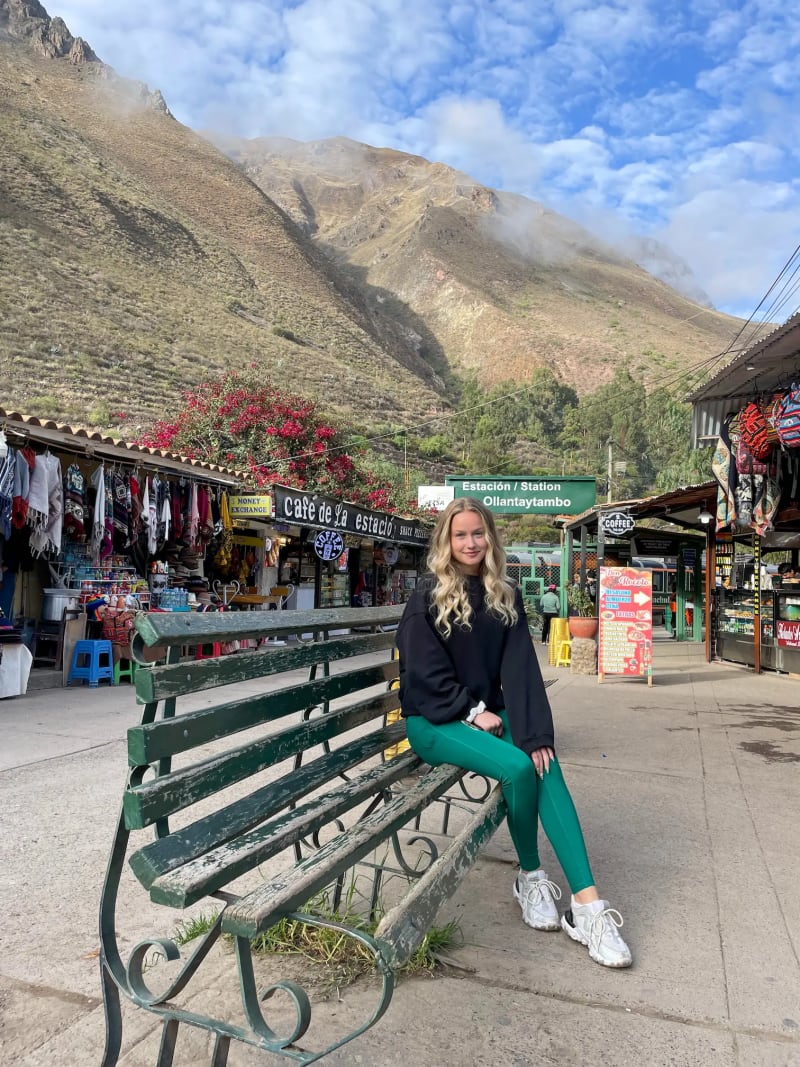
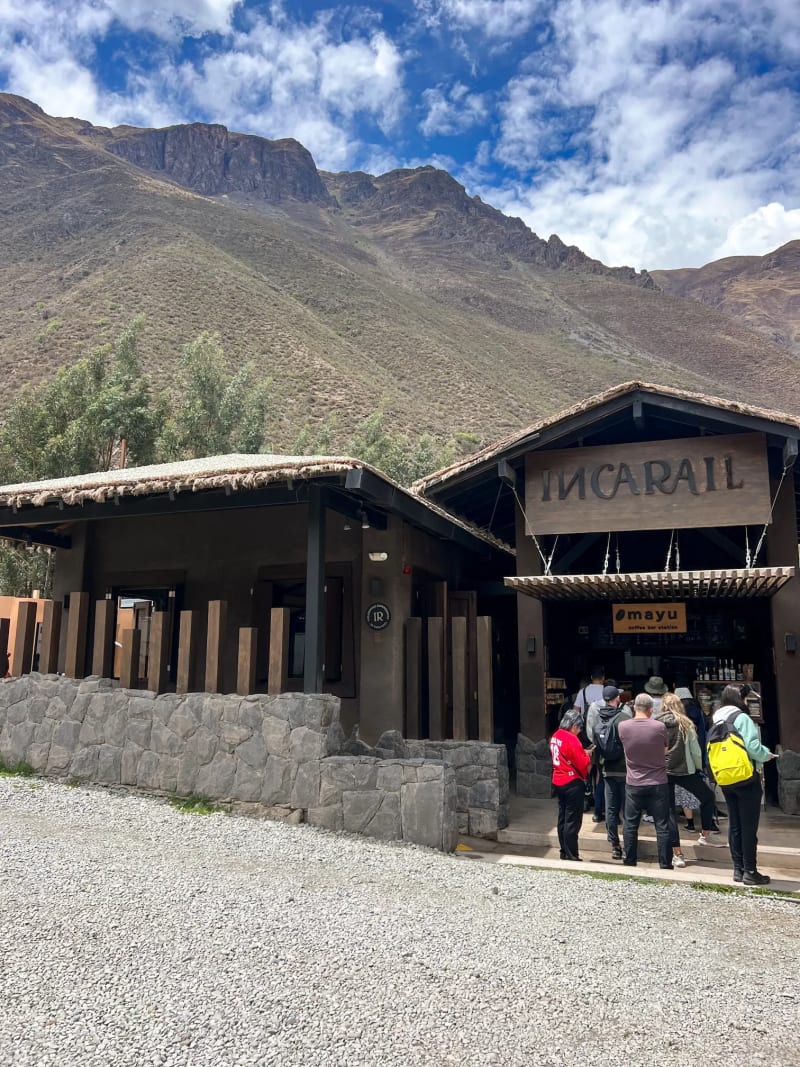
Ollantaytambo
Another reason is to explore the incredible sites and rich history of the region while slowly making your way towards Machu Picchu. The Sacred Valley was a vital agricultural and spiritual heartland for the Inca Empire. It's famous for super dramatic mountain scenery, ancient ruins, terraces, traditional Quechua villages. The two most popular base towns for this are Ollantaytambo and Urubamba.
How to Get There: A private taxi from Cusco to Ollantaytambo or Urubamba costs about 80–120 Soles ($22–$32 USD). You can use rideshare like Uber or Indrive, book online through sites like GetYourGuide, or ask your hotel to schedule a ride. For a budget option, a colectivo (shared van) is only about 15–20 Soles ($4–$5 USD); they depart from Calle Pavitos in Cusco (about a 10-min walk from the Plaza de Armas). You'll hear drivers shouting "Ollanta!" or "Urubamba!"—walk up to van, ask the price, and hop in. They depart as they fill.
Colectivo Tips: (1) Most vans to Ollantaytambo will stop in Urubamba first, so the price is usually the same. (2) Try to get a seat in the front or middle, as the back row can be bumpy on the mountain curves. (3) Keep your backpack at your feet; larger suitcases will be strapped to the roof. It's safe, but keep your valuables inside the van with you.
Ollantaytambo
Ollantaytambo is the most popular base in the valley. It still follows its original Inca urban layout, with stone-channeled water running through narrow cobblestone streets. It's incredibly atmospheric—feeling more "Inca" than other towns—and serves as the gateway to both the classic Inca Trail hike and the train to Machu Picchu.
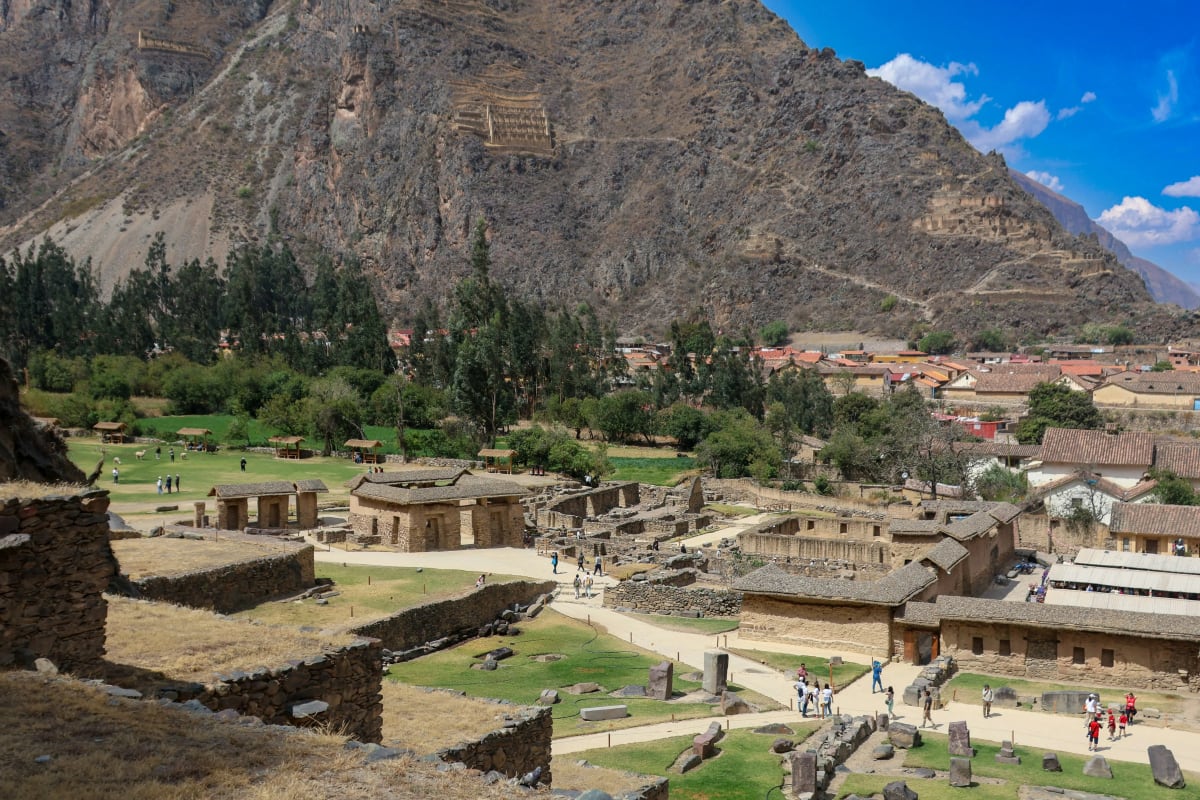
Ollantaytambo Archaeological Site, looking down at the Sector of the Granaries (Pinkuylluna) - Photo by Meg von Haartman
Some top things to do include:
- Ollantaytambo Archaeological Site: One of the most impressive and best-preserved sites in Peru after Machu Picchu. Explore the massive Inca fortress, terraces, the Temple of the Sun, and ceremonial areas.
- Pinkuylluna Granaries: A short but steep hike across from the main ruins leads to ancient storehouses built into the cliffside with great views over the valley and town.
- Old Town & Markets: Wander the streets, visit the local artisan markets, take a peaceful walk along the river, and explore the squares.
- Nearby Gems: Perfect for visiting the Inca quarries, the cave altar at Ñaupa Iglesia or the Pumamarca ruins.
Not all the transports are simple—some offered on Get Your Guide are super cool—they're transport and tours all in one. You'll get picked up in Cusco, go on a day tour of the Sacred Valley, then get dropped off in Ollantaytambo. Great way to get there and explore, then hop on the train from there to Aguas Calientes. See some below!
Urubamba
Urubamba is often called the "heart" or "capital" of the Sacred Valley. It's a larger, more laid-back town surrounded by mountains (including snow-capped Chicón), with a strong local/everyday Peruvian feel. It's home to many of the region's nicer hotels/resorts and is a comfortable base for exploring the wider valley without the crowds. Some things to do here include:
- Town Center: Relax in the square (Plaza de Armas), visit San Pedro Church, and explore one of the most authentic local markets in the region.
- Cerámicas Seminario: A world-renowned pottery workshop/studio where you can see (and buy) beautiful handmade pieces inspired by ancient pre-Columbian designs.
- Nearby Gems: Easy access to visit the Maras salt mines, the Moray circular agricultural terraces, Chinchero (textiles and ruins), or Pisac (ruins + market)
- Adventure: This is the go-to spot for rafting on the Urubamba River, horseback riding, or hiking to the Perolniyoc waterfall.
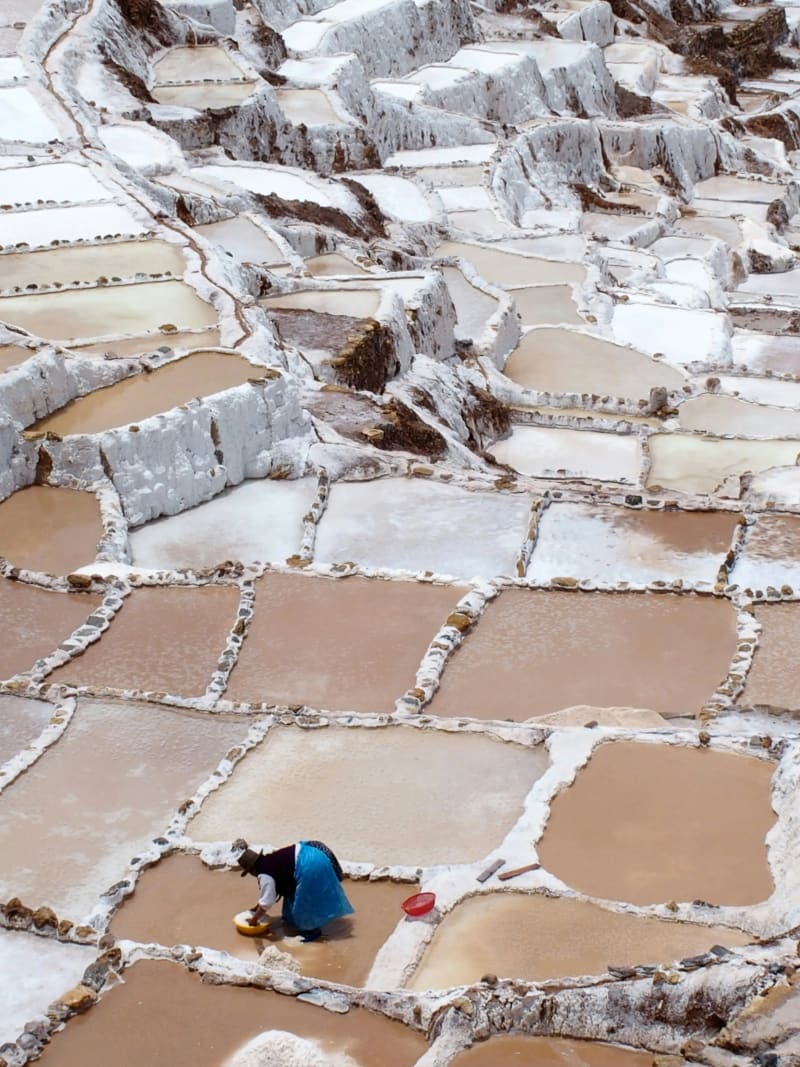
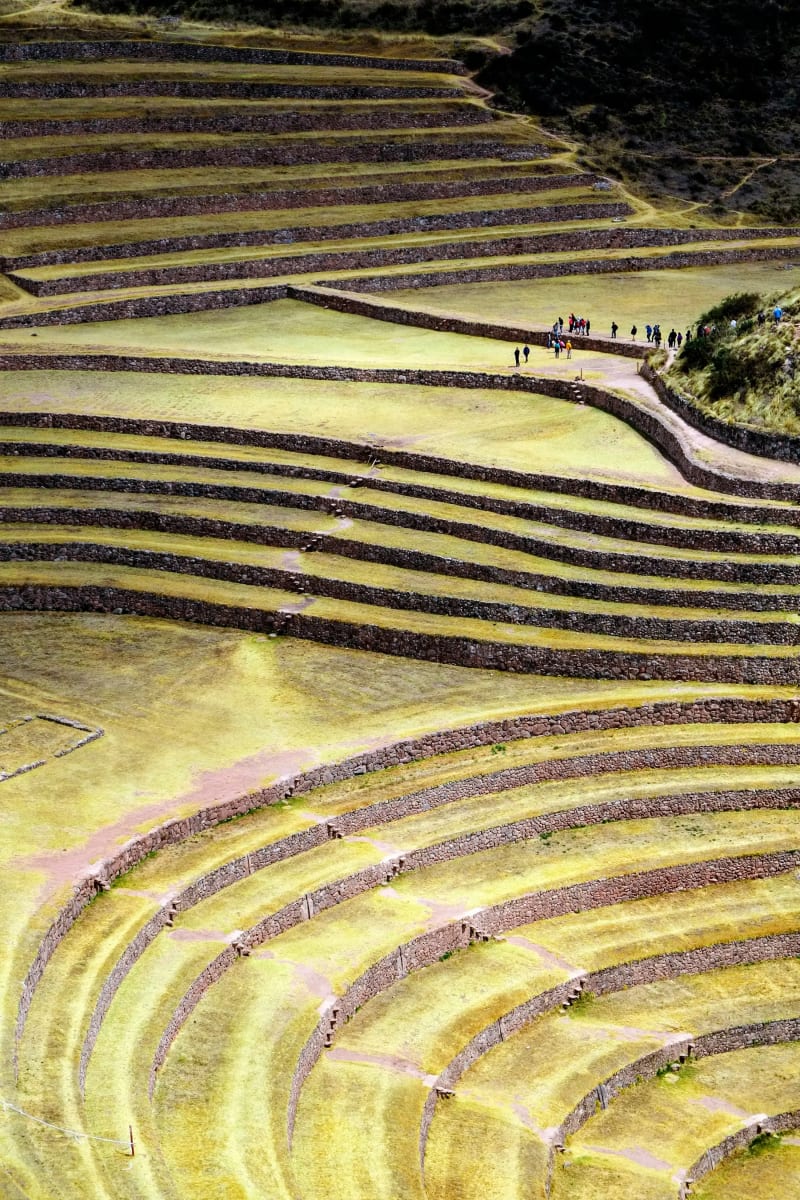
(L) Maras Salt Mines—Photo by Stuart Croft (R) Moray Terraces—Photo by Pedro Lastra
INCARAIL vs PERURAIL: Which One Should You Choose?
You'll have to choose between IncaRail and PeruRail, as they're the only two companies with trains into Aguas Calientes. While both companies are very similar, there are key differences in vibe, inclusions, and amenities. In very general terms: PeruRail is more elegant and traditional while IncaRail is more lively and modern.
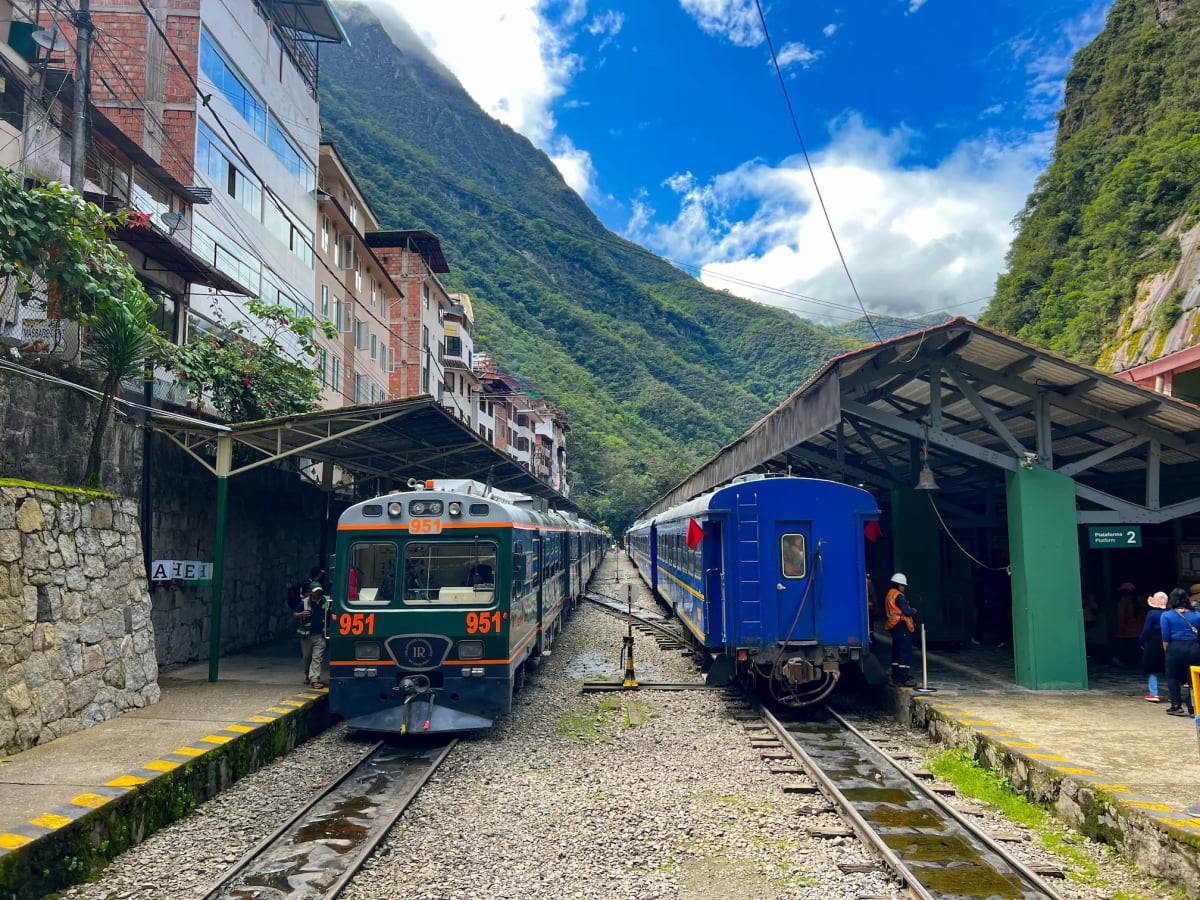
IncaRail (Left) and PeruRail (Right)
IncaRail
IncaRail uses a two-tier system: Classes (the type of train car; (1)Voyager, (2)360, (3)Prime, & (4)First Class) and Levels (the inclusions like guides or Aguas Calientes bus tickets; (1)Light, (2)Plus & (3)All-Inclusive). Each class/level combination ranges in price and amenities. This can be confusing, so here's the shortcut:
- Light: Just the bus transfer from Cusco and train ticket
- Plus: All "light" + hotel pick-up/drop-off in Cusco, the Aguas Calientes-to-Machu Picchu bus ticket, and a shared guide at the ruins
- All-Inclusive: All "light" & "plus" except you instead get a private guide (exception of Voyager) + your Machu Picchu entrance ticket.
This varies a little by class so check out my bubbles below for exact details.
Standard Inclusions (Every Ticket):
- Bus transfer from Cusco (Av. El Sol) to Ollantaytambo station
- Train ride from Ollantaytambo station to Aguas Calientes Station
- 8kg carry-on luggage
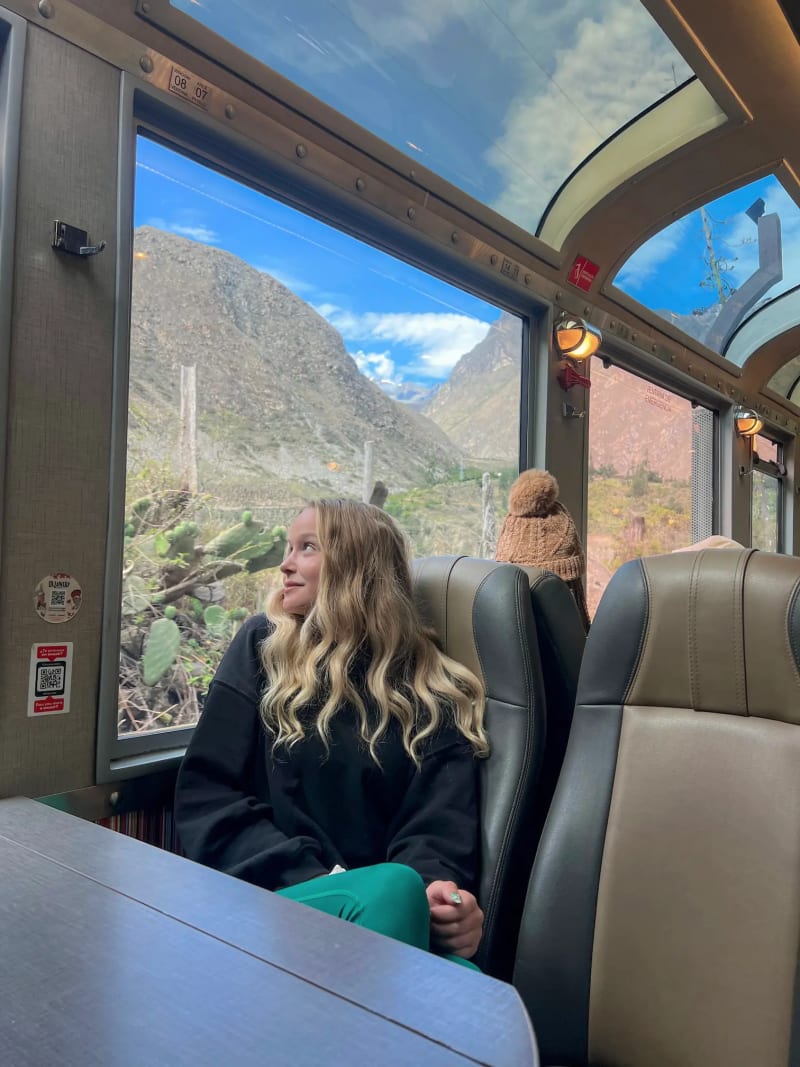
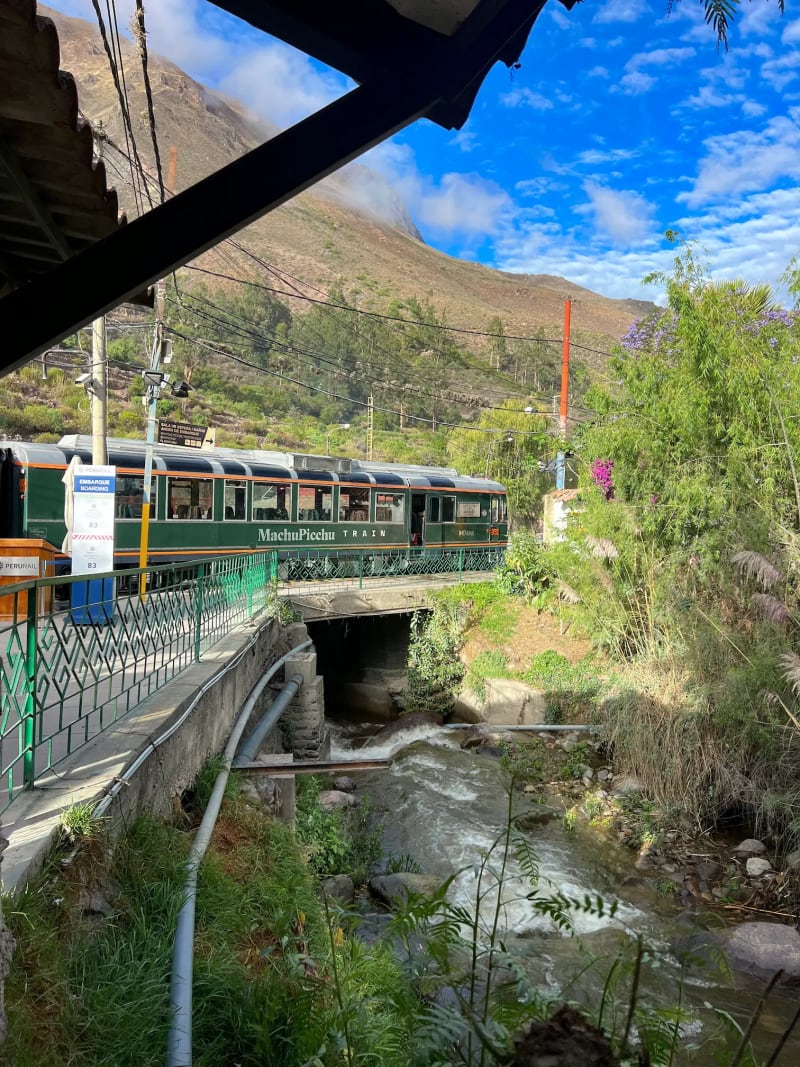
Below are the IncaRail class & level options (as of 2026) and the benefits they offer.
"The Voyager" - Economy
- Large, wide windows
- Comfortable with pretty spacious seating
"The 360" - Premium Economy
- Panoramic windows
- Full open-air observatory car
- Basic snacks
- Live music
"The Prime" - Premium
- Welcome pisco sour
- Dining car
- Open-air observatory car only in 'All Inclusive' tickets
- VIP lounge at stations
- Gourmet snacks
- Live music
"The First Class" - Luxury
- 3-course menu + wine & cocktail pairings
- Dining car
- Lounge/bar car with outdoor balcony
- VIP lounge at stations
- Live music & Kero ceremony
*Please refer to the IncaRail Official Website for up-to-date rates. All pricing I did above was from Cusco city to Aguas Calientes (bimodal) since that's the most popular.
"The Voyager" train car
Important for "Plus" & "All-Inclusive" levels: The included shared guide only operates at specific entry times. If your Machu Picchu entrance ticket doesn't align with IncaRail’s schedule, you won't be able to use the guide service. Before you buy, double-check that your ticket time and circuit match their availability. They can be flexible with this, so if you want to make a special request or have any doubts, reach out to Inca Rail via WhatsApp. Private guides (included in higher levels) offer more flexibility, but it's always best to confirm before you pay.
I overall recommend "The 360" because the open-air observatory car is SO worth it—definitely the best way to see the scenery. That being said, my boyfriend and I are often budget travelers, so we took “The Voyager - Light” and were honestly shocked at how panoramic the windows were for the "cheapest" ticket. Our experience was incredible—we had a very cool welcoming ceremony in Ollantaytambo and even got to see a dramatic cultural show while on the train! We paid a total of $234 USD (2 people, round trip) back in 2023, which I think was a great deal! Prices have risen a bit since then, but not by much.
The IncaRail crew leading us to the train in Ollantaytambo
PeruRail
PeruRail is more straightforward—they don't have "levels" like Light or Plus, just 4 different classes to choose from ((1)Expedition, (2)Vistadome, (3)Vistadome Observatory, & (4)Hiram Bingham). Note: Only the ultra-luxury Hiram Bingham includes the Machu Picchu entrance ticket.
Standard Inclusions (same as IncaRail):
- Bus to train station (for bimodal tickets)
- Train to Aguas Calientes Station
- 8kg carry-on luggage
Below are the PeruRail Machu Picchu ticket class options (as of 2026) and the benefits they have:
"Expedition" - Economy
- ~$85-115 USD/way
- Large, wide windows
- Comfortable with pretty spacious seating
"Vistadome" - Economy Plus
- ~$95-135 USD/way
- Panoramic windows
- Basic snacks
- Audiotour on route
- Cultural fashion show & Saqra dance
"Vistadome Observatory" - Premium
- ~$160-175 USD/way
- Observatory/bar car with open-air balcony
- Live music & show
- Gourmet snacks & drinks
- Audiotour on route
"Hiram Bingham" - Ultra-Luxury
- ~$570-600 USD/way
- Gourmet meal in dining car
- Bar car with complimentary drinks
- Open-air observatory car
- Live music show
- Cocktail at Sanctuary Lodge
- VIP lounge at stations
- Bus from Aguas Calientes to Machu Picchu, entrance ticket, & private guide
*Please refer to the PeruRail Official Website for up-to-date rates. All Pricing is averaged from the 3 Cusco stations (Wanchaq, San Pedro & Poroy).
My thoughts on IncaRail vs PeruRail:
I recommend using IncaRail over PeruRail UNLESS you're debating between the most luxurious (The First Class vs Hiram Bingham). Here's why:
- Budget Battle: IncaRail's “Voyager” beats PeruRail's "Expedition" and "Vistadome". The windows are bigger and more panoramic, and the price is usually slightly lower. The only difference is the "Vistadome's" complimentary snack, which you really don't need—just bring your own!
- The View: IncaRail's “The 360” observatory car is much better than the PeruRail "Vistadome Observatory" balcony, which isn't a full car. "The 360" is more open and gets less crowded.
- Luxury: If you're splurging, PeruRail's "Hiram Bingham" is an experience that IncaRail’s "First Class" can't quite match. Just note that the "Hiram Bingham" observatory car is much more open-air than the "Vistadome Observatory" but still less open-air than IncaRail's "The 360"
Regardless of which company you choose, book your tickets at least 4–6 weeks in advance—especially for the popular morning departures—as these trains are the only way into town and they sell out much faster than you’d expect!
Ticket Mix & Match:
Both companies allow you to book different classes for each leg (e.g. Vistadome Observatory there, Expedition back). This way, you can do a luxury experience heading there, and go for budget on the way back. Just remember: with IncaRail, whatever level you choose on the way there, you must get the same on the way back (e.g. if you get "Plus" on the way there, you're required to get "Plus" for the return).
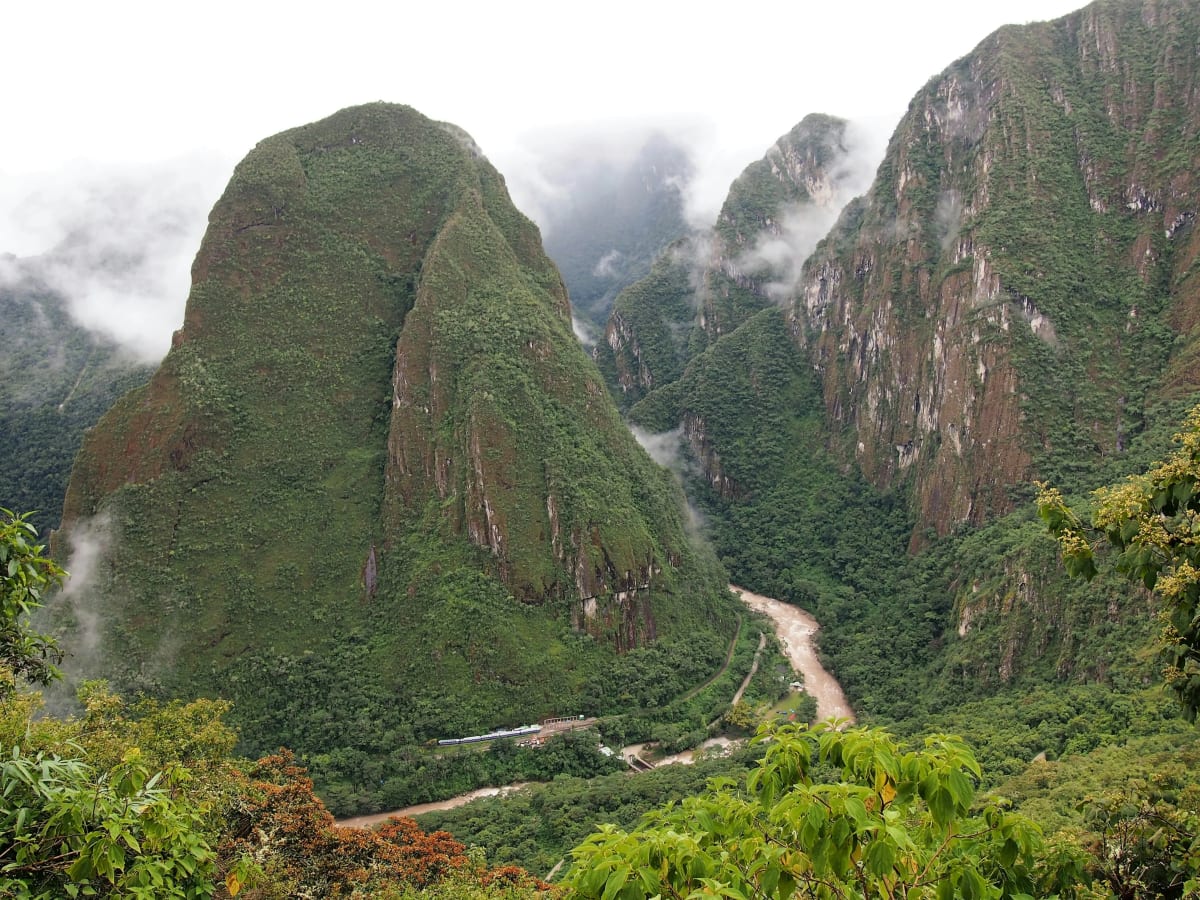
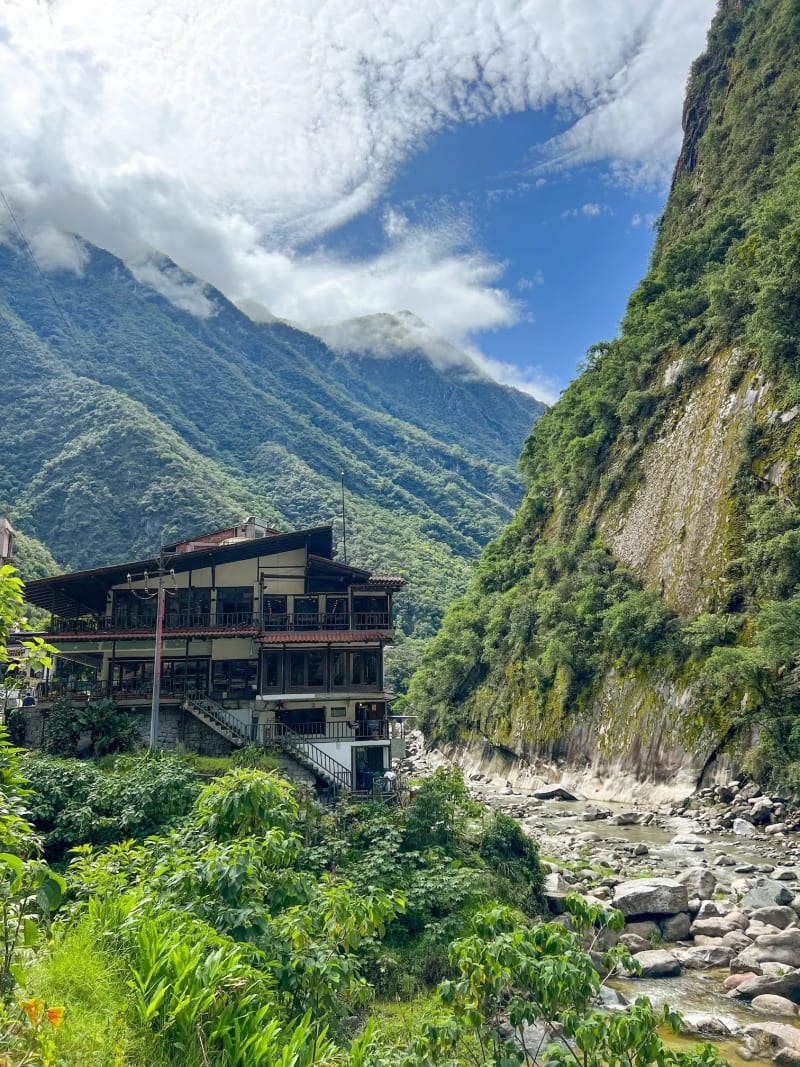
View of the mountains of Aguas Calientes & the Urubamba River - Photo by Deb Dowd
What Days Should You Get Your Train Tickets For?
One of the biggest mistakes travelers make is assuming their inbound and outbound train tickets have to be for the same day. While they can be, I highly recommend not to do this. Here are your three main options:
- Same Day (This is nuts don't do this): Take the train to Aguas Calientes in the morning, visit Machu Picchu in early afternoon, and catch the train back to Cusco in the evening. It's an incredibly long, exhausting day that leaves zero room for delays or just soaking in the moment. You'll be super rushed and stressed.
- Next Day (Sweet spot): Take the train to Aguas Calientes on day 1, explore the town, and have a nice dinner. Wake up early on Day 2 to visit Machu Picchu when you're fresh, then take the evening train back to Cusco. Great balance of adventure and relaxation.
- 3 Days (Deep dive): Take the train to Aguas Calientes on Day 1, visit Machu Picchu on Day 2, and return to Cusco on Day 3. This is the most relaxed and allows for more adventure, like doing multiple circuits[3] at Machu Picchu or a hike like Huayna Picchu. If you have more than 3 days to spare, spend them in Cusco or Ollantaytambo because there's more to do and see—Aguas Calientes is very small.
We went the ‘Next Day’ route, and it provided us with just enough time to be able to wander the town and explore without feeling rushed. We stayed at ‘Rupa Rupa High Jungle B&B’ for about $55 a night. It included a delicious breakfast on the terrace overlooking the town which was a huge highlight.
[3] To get to know the circuits as well as you now know the trains, head to my post on it for the Ultimate Guide to Machu Picchu Tickets!
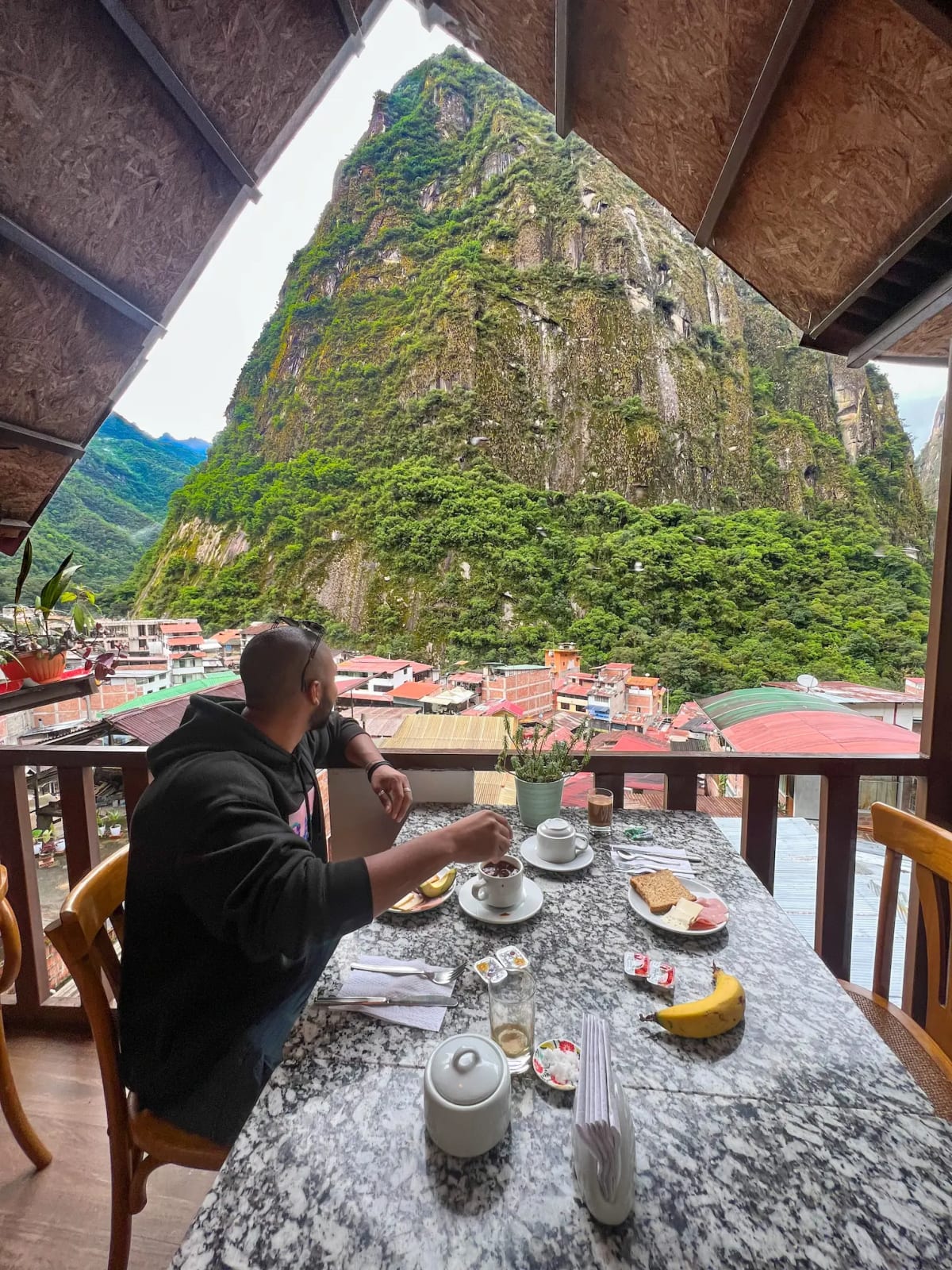
Breakfast at the Hotel Rupa Rupa High Jungle B&B
The whole trip was truly the experience of a lifetime. From flying into and exploring Lima, to taking the short hop over to Cusco and drinking coca tea for the altitude and playing with baby alpacas. Embracing the culture in Ollantaytambo, riding the famous train through the mountains, and finally seeing this Wonder of the World with our own eyes. I really hope this guide helps your trip go smoothly!
Check out my other guides to help plan your journey:
- Top Things to Do in Lima - The perfect starting point for your trip. Lima is the stepping stone to Cusco when flying into Peru internationally!
- Cusco Travel Guide - Including my best tips for adjusting to the high altitude, the historic sites you can't miss, and top Peruvian dishes to try (plus where to try them)
- Machu Picchu Entrance Tickets: How to Buy, Circuits, Times & 2026 Tips - Full breakdown of the 2026 circuits and which to choose.
I'll always do my best to help answer any specific questions—feel free to send me an email! And don't forget to subscribe to my blog for more travel guides and insider tips!